Metal Roof vs. Asphalt Shingles in Tennessee: Cost, Lifespan, Resale Value
July 17, 2026
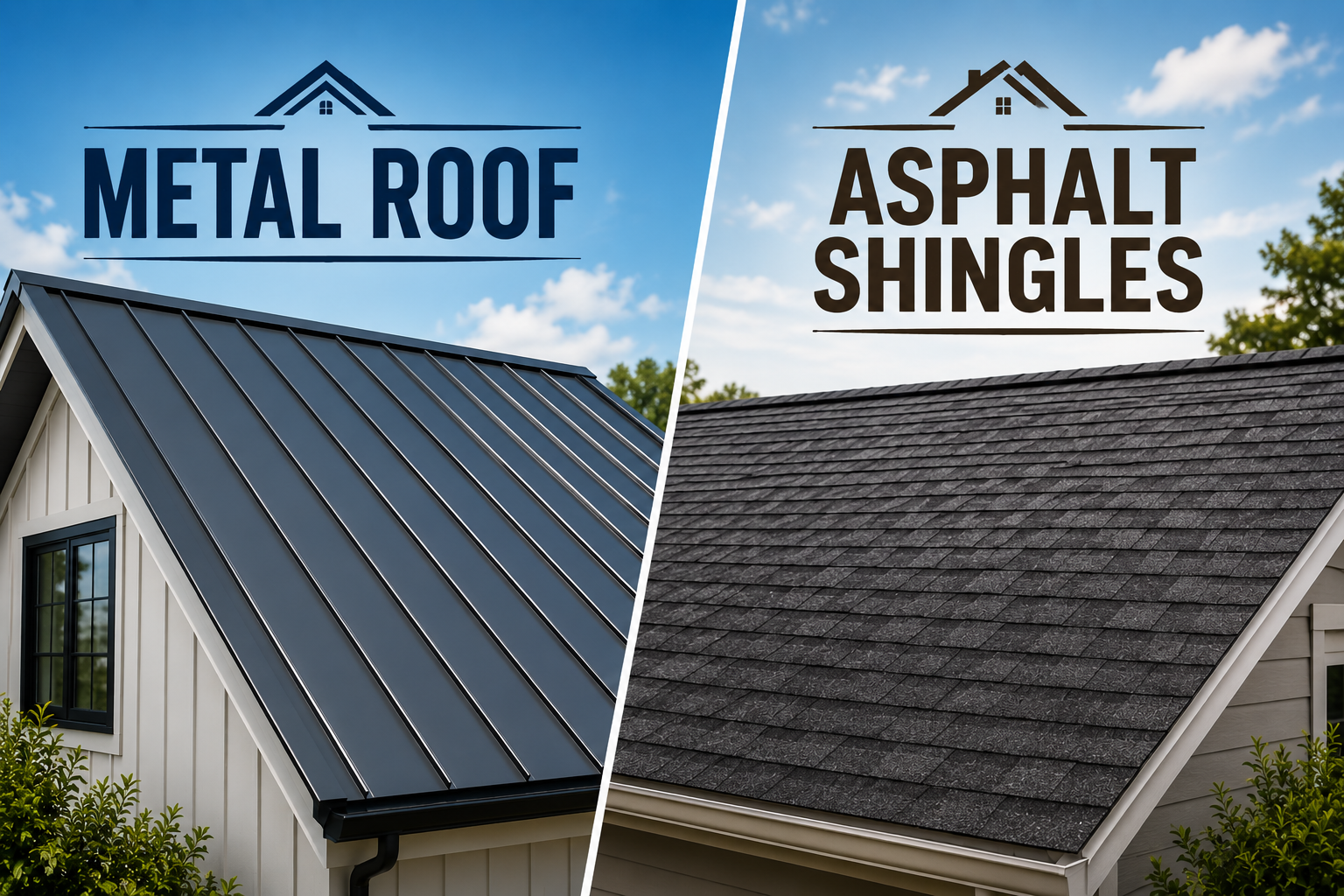
Metal roofs and asphalt shingles are two of the most common roofing materials. Asphalt shingles are used in 80% of the roofing projects with a market value of $7.38 billion. However, metal roofing is common due to durability, fire resistance, and weather resistance.
Let’s explore the key differences between metal roofing and asphalt shingles, including cost, resale value, and durability.
What the Numbers Look Like in Tennessee (2026)
Most homeowners want the price first, so let us start there.
Asphalt Shingle Cost in Tennessee
In Tennessee, asphalt shingles remain the budget-friendly pick. Most homes land between $4.50 and $8.50 per square foot installed. Basic three-tab shingles sit at the low end, while architectural (dimensional) shingles, which hold up better against wind, cost a little more.
For a typical single-family home, that works out to roughly $9,000 to $18,000, with the statewide average sitting around $15,000. Nashville and the rest of Middle Tennessee usually price higher than East or West Tennessee because of stronger labor demand and steeper, more complex roof designs.
Metal Roof Cost in Tennessee
Metal is a different tier. Standing seam metal roofs in Tennessee generally run $10 to $18 per square foot installed, and a full home often falls between $20,000 and $40,000.
Simpler exposed-fastener panels can start lower, while premium standing seam on a large or cut-up roof can climb past $45,000. The short version is that metal typically costs two to three times more upfront than asphalt.
Here is the honest way to read those figures. Asphalt wins on day-one cost. Metal wins on cost per year of service, and that is where lifespan changes the whole conversation.
Metal Roofing in Tennessee
Metal has earned its reputation in storm country. It sheds water, takes a beating from wind and hail, and keeps going for decades. That performance comes at a price, so it helps to weigh the good against the trade-offs.
Pros
- Longevity. A quality metal roof lasts 40 to 70 years, often outliving the homeowner who installed it. In a state that sees real storm activity, staying power matters.
- Weather and fire resistance. Metal handles straight-line wind, resists hail denting on thicker gauges, and will not catch flying embers. It also holds up well through the freeze-thaw cycles common in the higher elevations of East Tennessee.
- Energy and insurance perks. A metal roof reflects summer heat and can trim cooling costs, and many carriers offer premium discounts for impact-resistant metal systems.
Cons
- High upfront cost. The bigger price tag is the main reason more homeowners do not choose metal. Financing is often needed to make it work.
- Noise and repair complexity. Heavy rain can be louder without proper decking and underlayment, and dented panels or matching an older color can be harder to fix than swapping a few shingles.
Asphalt Shingles in Tennessee
Nationally, roughly four out of five roofs are asphalt, and there is a reason for that. Shingles are affordable, familiar, and quick to install. They also come with limits worth knowing before you sign.
Pros
- Affordability. Asphalt carries the lowest upfront cost of any mainstream roofing material, which keeps it within reach for most Tennessee families.
- Fast, simple installation. Most replacements finish in one to two days, and repairs are quick and inexpensive when a storm knocks a section loose.
- Style range and easy matching. Shingles come in dozens of colors and profiles, and algae-resistant options help fight the dark streaks our humidity tends to cause.
Cons
- Shorter lifespan. Three-tab shingles last about 20 years and architectural shingles about 30, so you may replace an asphalt roof two or three times during the life of one metal roof.
- Storm vulnerability. Tennessee's spring hail and wind can crack, curl, or strip shingles, which leads to more frequent insurance claims than metal owners tend to file.
Lifespan and Resale Value: The Long Game
Resale Value: What the Numbers Say
Resale is where a lot of homeowners get surprised. According to the 2025 Cost vs. Value Report, a metal roof recoups about 50% of its cost at resale nationally, while asphalt recoups closer to 68%. On paper, asphalt looks like the better return.
The percentage does not tell the whole story, though. Metal costs more because it lasts far longer, and buyers understand that.
A newer metal roof signals decades without a replacement, lower insurance, and better energy performance. Asphalt still adds strong value in its own right, especially when the old roof is worn out, since few buyers want to inherit a roof near the end of its life.
The Break-Even Point Over Time
There is also a break-even angle that most comparison articles skip. Because asphalt gets replaced two to three times over a single metal roof's lifespan, metal often becomes the cheaper choice somewhere around the 20 to 30 year mark.
If you plan to stay in your home for the long haul, that math leans toward metal. If you may move within the next decade, asphalt's lower cost and solid resale return usually make more sense.
Which One Fits Your Tennessee Home?
There is no single winner here, only the right fit for your budget, your roof, and how long you plan to stay. Tennessee's climate is tough on every material, with spring hail, straight-line wind, heavy humidity, and freeze-thaw swings in the highlands, so quality installation matters more in our state than in milder ones.
Lean toward asphalt if you want the lowest upfront cost, a fast install, and a dependable roof you are comfortable replacing down the road. Lean toward metal if you plan to stay put, want the longest possible lifespan, and value storm resistance along with potential insurance savings.